












MOTOR To Break Out Radiator Support Labor Times On 2027 Models
A change to the database used by CCC will require estimators to account separately for components attached to the radiator support.
Estimators using the CCC Intelligent Solutions’ system may notice lower labor times associated with radiator supports on newer vehicles. But it’s part of a change that should give them more flexibility in determining appropriate times and costs related to radiator support replacement.
MOTOR Information Systems, developer of the underlying database used by the CCC estimating system, is making the change related to labor times for radiator supports starting with 2027 model year vehicles. The estimated work time for the radiator support will be only for the time needed to remove and install just the support itself.
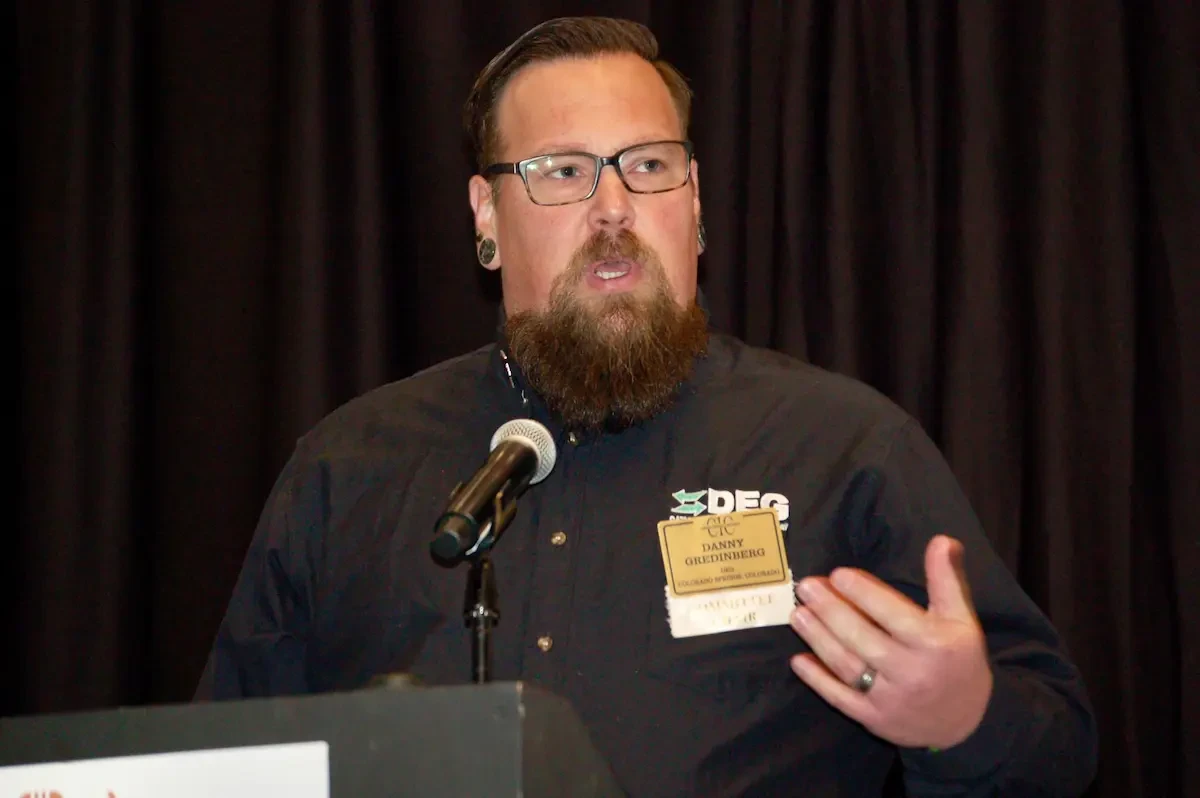
“A lot of users within the industry have been asking for the ability to separate mechanical operations from the radiator support itself, which is typically classified as body labor,” said Danny Gredinberg of the Collision Industry Conference (CIC) Estimating and Repair Planning Committee. “Now every component attached to the radiator support is going to be separated and no longer included [in the labor time for that support].”
Estimators will need to account for brackets, headlights, and other attached parts separately
Gredinberg said it’s going to be important for estimators and repair planners to be aware of this change.
“This is going to be a challenge because we’re used to thinking when you click on ‘radiator support,’ it includes everything,” Gredinberg said. “But the reality is that moving forward, we’re going to have to pay attention to what’s attached to that radiator support.”
This means if there are brackets or a headlight, for instance, that is now going to be separated out on your repair plan, “which means you can also classify a specific component classification [and corresponding] labor rate,” he said.
Gredinberg also said there may be some vehicle-specific footnotes related to labor times for some radiator supports, but those will be exceptions.
SCRS says multi-year push for accuracy in labor categories is paying off
Aaron Schulenburg, executive director of the Society of Collision Repair Specialists, said the change is one his association and other industry organizations have pushed for.
“We point to things that are challenging for us, asking for solutions, so I think it’s also important to acknowledge when good work has been done,” Schulenburg said. “There’s been a multi-year conversation around this particular issue. And I think it’s awesome to see a resulting change that reflects that industry feedback. We have very skilled technicians within our repair facilities that do specific tasks.”
He said problems arise when estimating systems don’t allow shops to assign the correct labor category and rate to each technician’s work.
“It makes it hard to break it out. It makes it hard to assign it within the management system, and it makes it hard to capture the appropriate rate category. Changes like this provide a different way for the industry to look at this. It requires a change in how you approach the development of that repair plan, but it gives us much more opportunity for accuracy.”
Mitchell tackled a similar labor category question in 2021
Gredinberg, who administers the Database Enhancement Gateway (DEG), noted that Mitchell addressed a similar labor category question in response to a 2021 DEG inquiry related to frame labor.
Mitchell pointed to its “labor general information” in its P-pages where it states: “The labor times shown in the Guide fall into various categories (for example, body, frame, mechanical) as determined by the repair facility’s operating procedures. As a guide, components for which R&I or R&R is commonly considered to be a mechanical operation when performed in a collision repair environment are designated with the letter ‘m’ in the text. These designations are only a guide. They are not necessarily all inclusive…”
As posted on June 11th, 2026 by John Yoswick from autobodynews.com
